 AI Supply Chain Brief
Thieves are hijacking data center freight
Thieves have taken more than $100 million in data center freight off U.S. highways since June, NBC News reports, often by first taking over freight broker accounts. If you ship servers, memory or power gear, checking who actually picks up the load is now part of the buy.
Four stories from the last three days, across logistics, procurement and warehousing. Every item links to the original source; summaries are our own.

1. Thieves have stolen more than $100 million in data center freight since June
More than $100 million. That's how much data center cargo thieves have taken off U.S. highways since June, NBC News reported on October 26, based on accounts from industry executives, consultants and investigators who advise police. Targets include servers, memory chips, fiber-optic cable, copper wire and data center power and cooling gear. In early June, a trailer with about $13 million in server equipment headed for Fayetteville, Georgia, was among the losses. The method is mostly digital: thieves take over freight broker accounts on load boards, post fake loads, send malware links to carriers that respond, then use those carriers' accounts to bid on real shipments. Some use fake driver's licenses, and in one large theft the tracking signal was spoofed. Scott Cornell, chair of TAPA Americas, told FreightWaves in August that two escorted loads were lost after escorts were deliberately hit, and he tied both to drivers who weren't properly vetted. Why it matters: the weak point is carrier and driver verification, which buyers and logistics teams can check before the load moves.
So what for logistics leadsFor every high-value AI hardware shipment in the next 60 days, confirm in writing how the carrier and driver are verified at pickup, and treat any emailed change to pickup details as suspect until confirmed by phone.
- List open orders and shipments for servers, memory, optics, power and cooling gear due in the next 60 days, and note who books the carrier for each (you, the supplier or a broker).
- Ask each broker or 3PL on those lanes for a written answer: how they verify the carrier, how they check the driver at pickup, and how they track the load if GPS goes dark.
- Set one rule with your team: any change to carrier, pickup time or delivery address that arrives by email gets confirmed by phone, using a number you already have on file, before release.
You are a logistics security analyst reviewing upcoming high-value shipments for theft risk. Inputs, all anonymized, one row per shipment: shipment code, item type (server, memory, optics, power, cooling, other), declared value, ship date, origin state, destination state, who books the carrier (us, supplier, broker), carrier verification method on file (or 'unknown'), tracking method, escort (yes/no).
[PASTE TABLE]
High-value threshold: [AMOUNT].
1) Flag shipments above the threshold.
2) For each flagged row, rate verification as strong, partial or unknown, and say why in one phrase.
3) Rank flagged shipments by value and weakest verification.
4) For the top 5, write the one question to send the broker or carrier before pickup.
Output: a table with columns shipment code, value, verification rating, rank, question. Keep it under 300 words. Use anonymized data only. List any missing or inconsistent data instead of guessing.
Sources: NBC News Independent reporting · Ars Technica Independent reporting · FreightWaves (TAPA Americas chair interview, Aug 14) Independent reporting · Proofpoint threat research Research/data
2. SK hynix says its DRAM and HBM output is effectively sold out through 2029
Sold out through 2029. SK hynix said on its third-quarter earnings call on October 28 that, counting long-term agreements and deals under discussion, its DRAM and high-bandwidth memory output for the next three years is effectively spoken for, and it expects memory demand to outrun supply through 2030. The company said customer requests for HBM are more than twice what it can supply, and that long-term agreements already cover more than half its capacity for 2027 and 2028. It also expects PC and phone shipments to fall as memory costs rise.
So what for buyersIf your products use DRAM or SSDs, ask your distributors now for 2027 allocation and pricing in writing, and flag any build plan that assumes today's memory lead times.
Sources: SK hynix newsroom Company announcement · Seoul Economic Daily Independent reporting · Seoul Economic Daily (earnings call detail) Independent reporting
3. SAP starts sending warehouse tasks straight to robots, and logging what they did
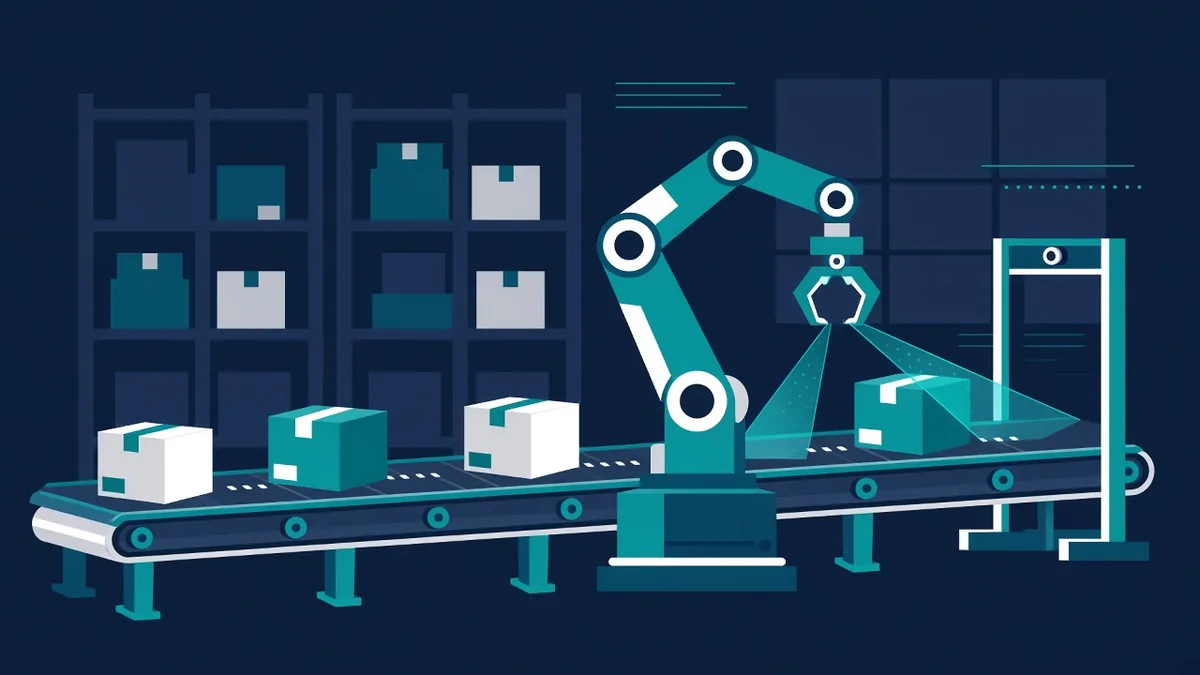
A humanoid robot at Arçelik-LG now takes its inbound storage tasks from SAP and records the result there. SAP showed the setup at TechEd on October 27 as part of new physical AI capabilities that send tasks from SAP Extended Warehouse Management to robots and write status and exceptions back. In a proof of concept at Intel's Chengdu site, SAP and Intel say material moves were automated end to end, with shorter transport distances and less manual handling; neither company gave figures.
So what for warehouse managersBefore your next robot pilot, ask whether the robot takes tasks from your WMS and reports back to it. A robot outside the system of record creates its own inventory errors.
Sources: SAP News Center Company announcement · Robotics 24/7 Independent reporting

4. Amazon Business lets buyers ask spend questions in plain language
Two years of purchase history and more than 60 reporting fields now sit behind a typed question, according to the National Association of Wholesaler-Distributors' MDM. Amazon Business said on October 27 at its Reshape event in Nashville that its Business Assistant can now answer spend questions, track orders and approvals, and suggest how to allocate payments for U.S. customers, with existing permissions and approval rules left in place. It also launched Value Intelligence, a report that combines savings, efficiency and policy compliance, with methods customers can review and adjust.
So what for procurement leadersBefore you share AI-calculated savings with leadership, check which reference prices they are measured against and adjust the method if it doesn't match how your team counts savings.
Sources: Amazon Business announcement Company announcement · MDM (NAW) Independent reporting · Digital Commerce 360 Independent reporting
More prompts like this: free 8-prompt sample · full AI Prompt Kit for Supply Chain Teams (from $7). It's our own product.