 AI Supply Chain Brief
The memory crunch sinks phone shipments, Taiwan moves to criminalize AI chip smuggling, and Amazon keeps shutting out shopping agents
Six stories from the past week across planning, trade, manufacturing, freight, warehousing and sourcing. Every item links to the original source; summaries are our own.
1. AI's appetite for memory just caused the worst quarter on record for smartphones
IDC's preliminary numbers show global smartphone shipments fell 22% year over year in the third quarter to about 255 million units, the steepest quarterly drop it has ever recorded. IDC blames the AI-driven memory shortage: memory costs are up roughly 350% from a year ago, and vendors have cut low-end models and raised prices. IDC expects pressure to last through 2027 and warns that some makers built ahead of next year's expected component squeeze, which could leave excess inventory if demand stays soft.
So what for plannersIf any of your products use DRAM or flash, treat memory as a constrained, fast-moving cost input in your plan. Re-run 2027 demand and cost scenarios with current memory pricing, watch for customers pulling back on budget models, and be careful not to build inventory ahead of a squeeze that weak demand may never absorb.
Sources: 9to5Mac Independent reporting · Mobile World Live Independent reporting · FoneArena Independent reporting
2. Taiwan plans to make unauthorized AI chip shipments to China a crime
Taiwan's economics minister, Kung Ming-hsin, told Bloomberg that Taipei will add AI servers and leading-edge semiconductors to its list of controlled goods, in line with commitments under its trade agreement with the US. Once the change takes effect, shipping restricted AI hardware to China without authorization would become a criminal offense under Taiwan's Foreign Trade Act. Today, Taiwan can only pursue suspected smugglers under other laws. No start date has been given.
So what for trade compliance teamsExpect tighter screening on AI servers and accelerators that ship from or through Taiwan. Check that your end-use and end-user documentation for this hardware is complete, ask your distributors how they plan to comply, and build some extra lead time into orders while the new rules are being set up.
Sources: Bloomberg Independent reporting · The Straits Times Independent reporting

3. Adani and Jabil sign up to build AI racks and servers in India
Adani Enterprises and contract manufacturer Jabil signed a non-binding memorandum of understanding on October 13 for a 50:50 joint venture to make and assemble AI racks, servers, storage, networking gear, power distribution, liquid cooling and transformers in India, plus installation and commissioning. The companies are aiming for multi-gigawatt rack capacity for Indian and export customers. No investment figure or production date was given, and the deal still needs definitive agreements and approvals.
So what for supply chain managersAnother region is lining up to build AI data-center hardware, which could widen your options for racks, power and cooling over time. Note it on your supplier map, but don't count on it as capacity until there's a signed JV, a plant and a qualified product.
Sources: Adani Enterprises release Company announcement · CNBC-TV18 Independent reporting · Voice&Data Independent reporting
4. Kodiak's autonomous trucks now run reefer and dry freight to Laredo
Kodiak AI and carrier Charger Logistics are hauling refrigerated and dry-van freight for food, beverage and consumer-goods shippers on the 435-mile lane between Dallas and Laredo, the busiest US land port of entry. The first load ran September 8, and a safety driver is still on board until Kodiak finishes its safety case. Charger owns the trucks and runs Kodiak's driving system under a driver-as-a-service model, and it has a separate autonomy deal with Aurora on the same lane.
So what for logistics leadsAutonomous capacity is reaching cross-border feeder lanes, not just Dallas to Houston. If you move freight toward Laredo, ask carriers which loads might ride autonomous trucks, how handoffs to Mexican carriers work, and what changes in tracking, liability and service commitments.
Sources: Kodiak AI news release Company announcement · FreightWaves Independent reporting · CCJ Independent reporting
5. Robots are sorting Zalando's fashion returns without item-by-item training
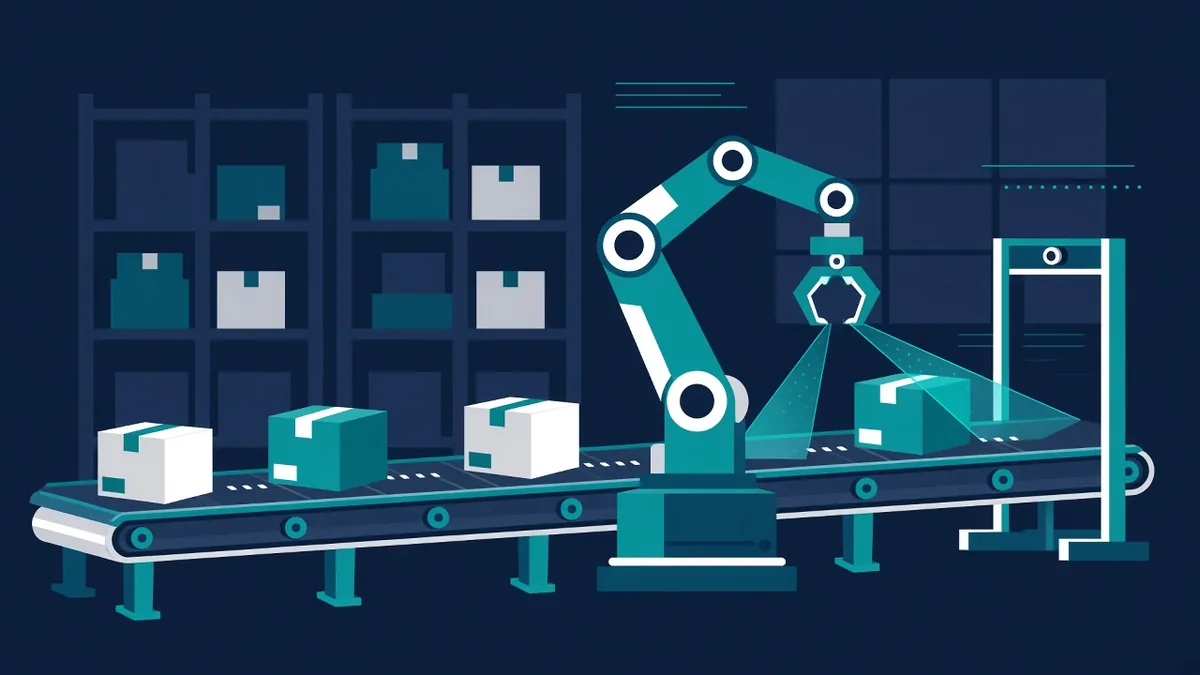
Sereact's two-armed robots are now sorting Zalando returns in live operations at CEVA Logistics sites in Greven, Germany, and Świebodzin, Poland. Sereact says its Cortex software lets the robots pick, identify and sort crumpled items they've never seen, without per-product setup or a fixed item list. The system is sold as robotics-as-a-service, and staff move to supervising stations, handling exceptions and checking quality. The companies call it the first step toward automating returns across Europe.
So what for warehouse managersReturns are among the hardest jobs to automate, so this is a useful test case. If returns volume is a pain point, ask vendors for live rates on mixed, messy items, what share of items still fall to people, and how pricing works under a service contract.
Sources: Sereact announcement Company announcement · The Next Web Independent reporting · International Transport Journal Independent reporting
6. Amazon keeps blocking outside AI shopping agents, and now Grok Bot hits the wall
On October 15, users posted screenshots showing xAI's Grok Bot being stopped from ordering on Amazon with a notice that access by an unauthorized AI agent breaks Amazon's Conditions of Use. Elon Musk replied that users could buy elsewhere and floated starting an Amazon competitor, without giving details. Amazon hasn't publicly commented on Grok Bot, but it confirmed last month that it blocked Meta's Muse agent and is fighting Perplexity in court, arguing that agents should identify themselves and get the store's agreement.
So what for procurement leadersAgent-driven buying will depend on which sellers and marketplaces let agents in. Before you pilot AI agents for purchasing, check each supplier's terms on automated ordering, favor channels with official agent or punchout integrations, and keep a person approving orders and payment details.
Sources: Teslarati Independent reporting · Investing.com Independent reporting · GeekWire (Muse block) Independent reporting
Make AI remember your role, your parts and your rules so you stop re-explaining them: grab the free Mini Context Card (sister site, not an affiliate link)
More prompts like this: free 8-prompt sample · full AI Prompt Kit for Supply Chain Teams (from $7). It's our own product.
